• Dorcas/Tabitha/Gazelle

    Acts 9:36-43

    36 In Joppa there was a disciple named Tabitha (in Greek her name is Dorcas). Her life overflowed with good works and compassionate acts on behalf of those in need. 37 About that time, though, she became so ill that she died. After they washed her body, they laid her in an upstairs room. 38 Since Lydda was near Joppa, when the disciples heard that Peter was there, they sent two people to Peter. They urged, “Please come right away!” 39 Peter went with them. Upon his arrival, he was taken to the upstairs room. All the widows stood beside him, crying as they showed the tunics and other clothing Dorcas made when she was alive.

    40 Peter sent everyone out of the room, then knelt and prayed. He turned to the body and said, “Tabitha, get up!” She opened her eyes, saw Peter, and sat up. 41 He gave her his hand and raised her up. Then he called God’s holy people, including the widows, and presented her alive to them. 42 The news spread throughout Joppa, and many put their faith in the Lord. 43 Peter stayed for some time in Joppa with a certain tanner named Simon.

    We are now in our third week of our Post Easter sermon series called wonders and signs. Rev Macie Liptoi began the series the Sunday after Easter, the youth group continued it last week, and now today and for the next three Sundays I am glad to join in. The term wonders and signs is found at the end of chapter 2 in the book of Acts. This follows Peter’s Pentecost sermon where the people in the crowd are so moved by what the Apostle has said they ask, “What are we supposed to do about all this?” What does this new Community of Faith look like? 

     42 The believers devoted themselves to the apostles’ teaching, to the community, to their shared meals, and to their prayers. 43 A sense of awe came over everyone. God performed many wonders and signs through the apostles. 44 All the believers were united and shared everything. 45 They would sell pieces of property and possessions and distribute the proceeds to everyone who needed them. 46 Every day, they met together in the temple and ate in their homes. They shared food with gladness and simplicity. 47 They praised God and demonstrated God’s goodness to everyone. The Lord added daily to the community those who were being saved. 

    So a pattern emerges at the end of Acts chapter 2: 

    the people are moved by Peter’s witness 

    what should we do?

     be baptized change your hearts and lives

     experience God’s salvation

     and God brought 3000 people into the community 

    the Believers devoted themselves to the apostles teaching

    building Community

    sharing meals

    praying together

    they had a sense of awe about what was going on around them

     God performed wonders and signs 

    every day they met together 

    they would sell their possessions and give the money to those who were in need 

    they shared food with gladness and simplicity 

    they praised God and demonstrated God’s goodness 

    the Lord added daily to the community those who are being saved 

    Over and over again we see when people are in tune with their faith, when they do the things that faithful people do- like listening to the apostles, praying together, sharing meals, worshiping together, serving others- when they do these things they are see God’s wonders and signs among them. Does God do wonders and signs because of the church’s spiritual practices? No! A skeptic might ask, “Has God stopped doing these things today since they are less obvious?” No. God is God, and is still in the business of doing wonders and signs. The question is about tuning in. The early church was so in tune with their faith practices and with what God was doing that they saw signs and wonders being done around them. This pattern is continued throughout the Acts of the Apostles; it’s not just confined to Jerusalem or Peter’s Pentecost sermon. Faithful people are ready for God’s signs and wonders because they are doing the things God has called them to do. They are being the people God has called them to be.

    Following Pentecost, Peter had a significant Healing Ministry going on. In Acts chapter 9, one day in Lydda day he comes across a man named Aeneas who has been bedridden for 8 years. Peter approaches him and says simply, “Jesus Christ heals you.” The man gets up and walks for the first time in 8 years. Peter was known throughout the area as someone who embodied the power of the resurrection of Jesus. Peter is clear that this is the work of the resurrected Jesus, and not his own. In the power of the Holy Spirit, Peter is in Lydda and doing these amazing things. The pattern continues: when faithful people live out their faith, God shows up, and God adds more faithful people to the church. The ministry is going well in Lydda; but now word comes to Peter that he needs to leave Lydda and travel to Joppa which is about 10 Mi away. Why does he need to go to Joppa? 

    Because a leader in the Church of Joppa had fallen ill and died. Her name was Tabitha in Hebrew or Dorcas in Greek both words mean gazelle.  I’ll be using both names interchangeably as the text does, so don’t be confused; I am talking about one woman. Dorcas, scholars believe, was a widow because her primary Ministry Focus was providing for widows in the community. Dorcas is ministering to the poor around her by providing the gift of clothing. She made them garments that they would not have been able to provide for themselves. She was a faithful leader in the early church. Dorcas was so unique that she is the only woman in the book of Acts to be named a disciple of Jesus. In fact, the reference to Dorcas is the feminine word for disciple in Hebrew- the only time that word appears in the entire New Testament. That is how important Dorcas/Tabitha/Gazelle was to the early church. 

    When she dies those widows, recipients of her generosity, flood her house with their tears. Having heard of his success in nearby Lydda, the community of widows call for Peter. They are so in touch with the wonders and signs of God that they fully expected Peter to help somehow. Significantly, the widows do not anoint Tabitha’s body for burial as other women planned for Jesus’ body the morning of Easter. The widows of Joppa simply wash Dorcas’ body, as we are washed and made clean through the sacrament of baptism, and wait for Peter. There’s this beautiful moment when the apostle arrives. The Widows lead Peter to the room where they have put Tabitha’s body. They present to the apostle the clothes Tabitha had made for them. They are literally sharing the fabric of Tabitha’s life with Peter, the fruit that this woman presented in the name of Jesus. 

    Peter kindly dismisses the women, closes the door, and then he knelt by the body and prayed. After a moment of prayer he turns to the body and says. “Tabitha get up!” and she opened her eyes and saw Peter. It’s very similar to an encounter Jesus had at the home of a leader of the synagogue whose daughter had fallen ill and died. Jesus took the child by the hand, said talitha koum which means, “young woman get up.” The words Peter uses are “Tabitha get up.” Tabitha opens her eyes and Peter calls the community together, presenting Dorcas alive to them again. It recalls the women who had seen the resurrected Jesus on Easter Sunday: “I’ve seen the Lord!” The news spread throughout Joppa and many put their faith in the Lord. The widows are not surprised by any of this- they were used to seeing wonders and signs embodied by Tabitha, and had heard of Peter’s ability to embody the same. They are in tune with what God is doing.

    You might have heard that last weekend a new Methodist denomination, the Global Methodist Church, was formed. This is a group of very conservative, evangelical former United Methodists who have decided to leave the UMC denomination and create their own with its unique piety and discipline. On a personal level, I grieve the potential loss of clergy colleagues and friends. I haven’t spoken about this publicly because our North Texas bishop said in a meeting recently that only five churches, out of 300, were considering joining the new Methodist denomination. To be honest, I have not approached this new development with a hair on fire perspective because Grace Sherman is not one of those five churches. Could a new Methodist church be planted in Sherman in the next few years that is aligned with this new denomination? Sure, it’s possible, but we are not in competition with other churches. 

    That doesn’t mean we are not confronting our own challenges as a congregation.  The church has been in a state of decline for many years well before the covid-19 pandemic. Grace lost people since the pandemic. Many people worshiped online when we were not able to meet in person. Some of those are continuing to worship online for their own safety and well-being. Some decided to either worship elsewhere or not worship anywhere because they are enjoying their Sundays. All of this has led to an abundance of people who are simply not around and not available to participate in any of the ministries of Grace Church. It put an undue burden on our leadership and staff to carry much of the ministry of the church. The financial status of the church has been struggling the last couple of years, and that has continued since we’ve been back in person for the last 12 months now. We simply have not recovered the financial support we had before the pandemic, and we may need to address these issues in next year’s budget if things do not turn around. For the record, every church is facing the same challenges.

    From my perspective, the bigger issue impacting Grace UMC is not the Global Methodists. It’s whether we, like Dorcas, Peter, and the widows of today’s story, are in tune with God’s wonders and signs. This is a spiritual issue and it’s linked directly to what we’re seeing in the book of Acts. When people stop investing themselves in the spiritual disciplines then we will become disconnected from each other. We no longer sense the Wonders and signs of God around us and instead focus on things that are frustrating, frightening, and concerning.  Remember it was the practices people had in common that gave life to their faith. They listened to the apostles’ teaching, shared meals together, they worshiped together, they prayed together, they served together. Notice how many times I’m saying the word together? It was in doing these disciplines of the faith that allowed the Wonders and signs of God to be revealed. As I said before, those things have not stopped. God has not stopped being God. The resurrected Jesus has not stopped sharing resurrection power.  Is our concern about Grace UMC, or our worry about a new Methodist denomination more evident in our lives than the spiritual practices that brought us to the faith in the first place? (ask twice) If we are to be known by Who We Are then we have to embody what we believe. 

    This was the case of Dorcas. People in the community knew her because they knew what she did as a result of her faith: ministering to those she was most associated with- the widows- in ways that were tangible and made a difference in their lives. When Dorcas died the community was distressed, but out of their collective faith they called The Leader of the entire movement to help- and he got on the first bus to Joppa. Peter knew the name Tabitha. Her works and faith preceded her.

    For me that is where our focus need to be. Are we doing the disciplines of our faith that will help us to see the Wonders and signs of God? When we become part of the United Methodist Church we promise to uphold that congregation with our prayers, presence , gifts , service and Witness. So in light of the challenges I mentioned above, let’s ask ourselves:

    How am I supporting the church with my prayers?

    How am I supporting the church with my presence?

    How am I supporting the church with my gifts- specifically financial gifts?

    How am I supporting the church with my service?

    How am I supporting the church with my witness?

    When we are all living out those commitments Grace will be a community just like the one in the book of Acts, a community that is defined by Joy. We’ll be seeing God’s wonders and signs everywhere. And every day the Lord will lead people to join in the vision to embrace all, engage with Jesus, and expand the kingdom. In the name of the Father the Son and the Holy Spirit, Amen

  • Maundy Money

    John 13:1 –17, 31b –35

    13 Before the Festival of Passover, Jesus knew that his time had come to leave this world and go to the Father. Having loved his own who were in the world, he loved them fully. 2 Jesus and his disciples were sharing the evening meal. The devil had already provoked Judas, Simon Iscariot’s son, to betray Jesus. 3 Jesus knew the Father had given everything into his hands and that he had come from God and was returning to God. 4 So he got up from the table and took off his robes. Picking up a linen towel, he tied it around his waist. 5 Then he poured water into a washbasin and began to wash the disciples’ feet, drying them with the towel he was wearing. 6 When Jesus came to Simon Peter, Peter said to him, “Lord, are you going to wash my feet?”

    7 Jesus replied, “You don’t understand what I’m doing now, but you will understand later.” 8 “No!” Peter said. “You will never wash my feet!” Jesus replied, “Unless I wash you, you won’t have a place with me.” 9 Simon Peter said, “Lord, not only my feet but also my hands and my head!” 10 Jesus responded, “Those who have bathed need only to have their feet washed, because they are completely clean. You disciples are clean, but not every one of you.” 11 He knew who would betray him. That’s why he said, “Not every one of you is clean.”

    12 After he washed the disciples’ feet, he put on his robes and returned to his place at the table. He said to them, “Do you know what I’ve done for you? 13 You call me ‘Teacher’ and ‘Lord,’ and you speak correctly, because I am. 14 If I, your Lord and teacher, have washed your feet, you too must wash each other’s feet. 15 I have given you an example: Just as I have done, you also must do. 16 I assure you, servants aren’t greater than their master, nor are those who are sent greater than the one who sent them. 17 Since you know these things, you will be happy if you do them.

    John 13:31-35

    31 When Judas was gone, Jesus said, “Now the Human One has been glorified, and God has been glorified in him. 32 If God has been glorified in him, God will also glorify the Human One in himself and will glorify him immediately. 33 Little children, I’m with you for a little while longer. You will look for me—but, just as I told the Jewish leaders, I also tell you now—‘Where I’m going, you can’t come.’

    34 “I give you a new commandment: Love each other. Just as I have loved you, so you also must love each other. 35 This is how everyone will know that you are my disciples, when you love each other.”

    From today’s Hereford Times:

    A FORMER headteacher at a Hereford secondary school has been gifted special money from the royal family – but what is Maundy Money?

    Every Maundy Thursday, the Queen gives money to a number of nominated people from across England and Scotland. The Royal Maundy Service has not gone ahead for the past two years. Instead, the Maundy money was blessed at the Chapel Royal, before being posted to recipients alongside a letter from The Queen. This year the service has taken place at St George’s Chapel, Windsor and the recipients will receive their Maundy money and purses from The Prince of Wales, who is representing the Queen.

    What is Maundy Thursday?

    Maundy Thursday is the Christian holy day falling on the Thursday before Easter, commemorating the Last Supper of Jesus Christ with the apostles. It is part of Holy Week, which starts on Palm Sunday, and not only symbolises the end of Lent but it also marks the lead up to the celebrations of Easter. It includes Maundy Thursday and ends on Holy Saturday and is described as “the most solemn week of the Christian year”.

    What is Maundy money?

    As part of the traditional Ceremony of the Royal Maundy, the Queen takes part in a service, and during the event she will gift the purses containing the money to a number of deserving senior citizens. This year, Prince Charles took part in the service instead. The tradition of presenting alms on Maundy Thursday goes back to at least the 4th century and in this country, the first record of the monarch doing it is in 1213. The number of recipients changes ever year, and this year there will be 96 men and 96 women to receive a purse. This is because the number of recipients is equal to the monarch’s age, and the Queen will turn 96 on April 21. Maundy coins are specially minted and are legal tender.

    Who is being sent Maundy Money in Herefordshire?

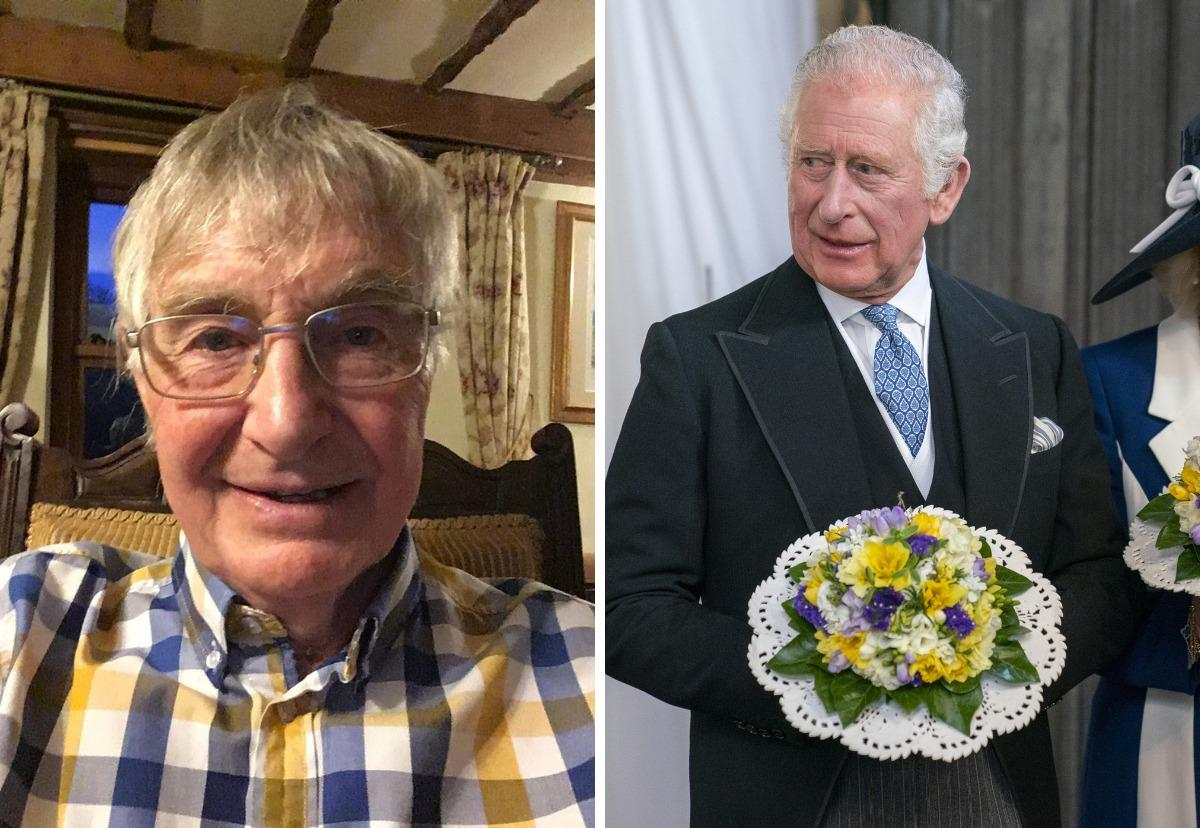
    Andrew Marson is the only Herefordshire recipient in this year’s Maundy Money from the Diocese of Hereford. Mr Marson is a former headteacher of the The Bishop of Hereford’s Bluecoat School from 1986 to 2007 and treasurer of Preston Wynne Holy Trinity Church. He retired from his role as headteacher and soon took up an active role in his church, Holy Trinity in Preston Wynne, where he led a church youth group and runs services. He has also led a successfully bid and secured heritage lottery funding to refurbish Holy Trinity Church.

    Mr Marson said: ““I was surprised and wondered how my name had been put forward. I am looking forward to sitting in St George’s Chapel again and being amongst such worthy people as part of this tradition, which reflects the monarch’s leadership of the Anglican church.” I spent 21 happy years at the Bishop of Hereford’s Bluecoat School and tried to serve the students and staff to the best of my ability. Maundy Thursday signifies for me Jesus as the servant king. The school motto is ‘always faithful to Christ’. I was a Deputy Head in Windsor for 8 years so it will bring back many happy memories.”

    The Rt Rev Richard Jackson, Bishop of Hereford, who made the nomination,s said: “The Maundy Money ceremony is an opportunity to recognise the long-standing contribution of two individuals, who have made an incredible difference to people’s lives and the ministry of the Church in our Diocese. “I am delighted that the service will take place in person this year. It is a joyous celebration, and I am deeply thankful for Janet and Andrew’s ministry in this diocese.”

    Anyone here aware of this tradition? The Queen of England- technically the head of the Church of England- handing out cash during Holy Week? The article mentions it happens every Maundy Thursday dating back to the 13th century, at least for the British monarch. The article did not define the word Maundy, which is not an every day modern English type word. According to Miriam-Webster.com, the word is derived “…from Middle English maunde, from Latin mandatum command, order; from the words spoken by Jesus to his disciples after washing their feet at the Last Supper, ‘a new commandment I give unto you, that ye love one another’ (John 13:34 Authorized Version).”

    Sequentially, yes, the dictionary website is right that the commandment to love does follow Jesus washing the feet of the disciples. But there is a significant gap- about twenty verses- between footwashing and the command to love. In the gap, Jesus predicts his betrayal and dismisses Judas from the room: “After Judas took the bread, Satan entered into him. Jesus told him, ‘What you are about to do, do quickly.’ So when Judas took the bread, he left immediately. And it was night.” Satan’s presence in Judas precludes him from truly loving Jesus or anyone else. The darkness that enfolds him and the other enemies of justice, peace and mercy is powerful and overwhelming.

    Before Judas leaves the table to betray Jesus, the word love or loved appears a handful of times- eleven times in twelve chapters (this includes the famous John 3:16, “…for God so loved the world…”). But between Judas’ exit and his return at the garden, love/loved shows up 28 times. In three chapters. In between two encounters with Judas, first around a table surrounded by his teacher and friends, then in a garden accompanied by armed police and leaders of the religious opposition, Jesus speaks of this radical love over and over. Hear this:

    “As the Father loved me, I too have loved you. Remain in my love. If you keep my commandments, you will remain in my love, just as I kept my Father’s commandments and remain in his love. I have said these things to you so that my joy will be in you and your joy will be complete. This is my commandment: love each other just as I have loved you. No one has greater love than to give up one’s life for one’s friends. You are my friends if you do what I command you. I don’t call you servants any longer, because servants don’t know what their master is doing. Instead, I call you friends, because everything I heard from my Father I have made known to you. You didn’t choose me, but I chose you and appointed you so that you could go and produce fruit and so that your fruit could last. As a result, whatever you ask the Father in my name, he will give you. I give you these commandments so that you can love each other” (John 15:9-17).

    As tensions heighten on that first Maundy Thursday, love is taught and displayed more and more. When we think about embodying God’s love, or abiding in Jesus’ love, most of the time we are thinking about caring for each other: praying for those who are sick, supporting those who grieve, providing for those in need. The love Jesus calls us to, however, goes beyond care. I like to say that the purpose of the church is to form people into the image of Christ. That means that we are to love as Jesus loved. A love that is for all- a love put on display on his cross, which is John is understood not as a weapon of oppression but a throne where Jesus fully receives and displays his ultimate authority: “When I am lifted from the earth, I will draw all people to myself.” What is the force the draws people to Jesus? Love. God’s radical, status challenging, political, anti-racist, pro-justice, anti-imperialist, love.

    Over the centuries the anticipated outcome of Maundy Thursday changed from radical love expected of every Jesus follower to gifts of charity by powerful individuals. The love Jesus calls us to changed from justice and righteousness, social and personal holiness, to a symbolic gesture. Ironically, on the same night Judas received a reward in coins for revealing the location of Jesus’ secret prayer garden, the monarch dispenses coins from the treasury. The Maundy money, those specially minted coins, are often kept for keepsakes, not used to buy food for the hungry, clothes for the naked, a place to live for those without secured housing. What is the impact of shifting the burden of radical love to symbolic gifts of charity? It lessens the responsibility on us. Since someone- the Queen, the Pope- has done something on camera, it takes the rest of us off the hook. I’m not criticizing their generosity; I’m challenging the complacency in everyone else that is an unexpected outcome. It makes it easier to accept the way things are, rather than make the necessary changes in the world Jesus called for and commanded us to pursue.

    Sometimes Maundy Thursday services involve footwashing, or if that is too messy/stinky/logistically challenging, the washing of hands. But I would argue the command to love is messier than the stinkiest of feet. The kind of love Jesus mandates his disciples to have- to exhibit to the world- is a radical, self giving, self denying kind of love. A love that insists on solidarity with the poor, the marginalized, the oppressed. The kind of love that protests injustice wherever it is encountered; the kind of love that challenges the demands of empire, forces that endanger peace and well being for all; the kind of love often dismissed even within the walls of the church as too political, too controversial, too upsetting to the way things are. 

    We are not washing feet or hands tonight. The Church at one point in its history debated making footwashing a sacrament, but decided not to. Jesus used it as an example; sacraments are ordinances either instituted by Christ (holy communion; “do this in remembrance of me…”) or participated in/received by Jesus himself (baptism). As we prepare to participate in the sacrament Jesus instituted on this night, let us ask ourselves: How are we embodying the love of Jesus? How is my love for Jesus shown in my love of neighbor- and not just those who worship like me, speak like me, vote like me, live in a neighborhood like mine. As we serve each other, be mindful of the call- no the command, the mandate- to love. Consider: what am I doing to embody love? What am I not doing? Are my actions- is my inaction- keeping the most vulnerable from experiencing God’s love? Nourished and sustained by communion, we are sent to love. “I give you a new commandment. Love one another with the radical, barrier breaking love of God. Then everyone will know you are my followers. If you have love for one another.” In the name of the Father, the Son, and the Holy Spirit, Amen.

  • Luke 13:31-35

    Sorrow for Jerusalem

    31 At that time, some Pharisees approached Jesus and said, “Go! Get away from here, because Herod wants to kill you.”

    32 Jesus said to them, “Go, tell that fox, ‘Look, I’m throwing out demons and healing people today and tomorrow, and on the third day I will complete my work. 33 However, it’s necessary for me to travel today, tomorrow, and the next day because it’s impossible for a prophet to be killed outside of Jerusalem.’

    34 “Jerusalem, Jerusalem, you who kill the prophets and stone those who were sent to you! How often I have wanted to gather your people just as a hen gathers her chicks under her wings. But you didn’t want that. 35 Look, your house is abandoned. I tell you, you won’t see me until the time comes when you say, Blessings on the one who comes in the Lord’s name.”

    I’ve done a fair amount of driving recently. Last weekend we watched The Batman for Miles’ birthday party; we could have seen it here locally, but we wanted an extra fun experience, so we went to the Alamo Drafthouse in Denton. I had lunch with a clergy colleague the other day in Aubrey. Linus and I saw Elton John in concert in Dallas- his Christmas 2019 gift. Yesterday I drove our boys to Madisonville, where my mom collected them for a week in Bay City for Spring Break. Each of those drives involved a certain amount of planning: fuel for the car, tickets for the movie, a non-chain restaurant, time coordination with the boys’ grandmother. Christy and I are making plans for a summer road trip with the boys to Florida. I’m thinking about journeys and the necessary planning today because Jesus in Luke is making preparations for his own journey- to Jerusalem. It will not be a time of entertainment, celebration, or rest.

    Jesus was very familiar with Jerusalem. He wasn’t born there, but he got there as fast as he could- circumcised in the Temple on his eighth day of life. A prophetess, Anna, was there, saw the infant Jesus, and left speaking to everyone about Jesus and the coming redemption of Jerusalem. Jesus and his parents returned to Jerusalem each year for Passover. The devil’s final temptation of Jesus happened in, you can say it with me, Jerusalem. Jesus’ ministry began in the Galilee, but Jerusalem always lingered on the horizon: “As the time approached when Jesus was to be taken up into heaven, he determined to go to Jerusalem. He sent messengers on ahead of him. Along the way, they entered a Samaritan village to prepare for his arrival, but the Samaritan villagers refused to welcome him because he was determined to go to Jerusalem” (Luke 9:51-53).  This passage takes place near the end of Chapter 9 of the Gospel of Luke, four chapters ahead of our text for today. Galilee was under the control of the evil Herod Antipas, Tetrarch of Galilee, during Jesus’ lifetime. Antipas was the son of Herod the Great, the Roman installed Jewish king who ordered the slaughter of the innocents after Jesus’ birth. Upon Herod’s death, the Roman occupiers divided up control of Israel between the kids. 

    The religious leaders, who hounded Jesus constantly throughout his ministry, at least on this day express concern for him. “Hey, you think we’ve been tough on you- honestly we have- but Herod? This guy is evil. He is looking to kill you.” Herod Antipas murdered John the Baptist; now he is coming for Jesus. “That fox?” Jesus responds. “Go tell that fox if he wants me I am right here, going about the work I have been called to. Healing people, exorcizing demons, doing the things that must be done. I’m here all weekend. If he wants me, he can find me.” 

    Of all the metaphorical animals to describe the nature of Herod and himself, it’s interesting that Jesus chooses fox and hen. Earlier in the gospel Jesus says, “Foxes have dens and the birds in the sky have nests, but the Human One has no place to lay his head.” Herod’s den is a lavish fortress, the ultimate symbol of earthly power. But Jesus has no home, no place of comfort to rest. He is a hen, longing to provide shelter for his wandering and vulnerable chicks. Why didn’t Jesus choose an animal above the fox in the foodchain for himself? 

    The great preacher Barbara Brown Taylor writes, “If you have ever loved someone you could not protect, then you understand the depth of Jesus’ lament. All you can do is open your arms. You cannot make anyone walk into them. Meanwhile, this is the most vulnerable posture in the world –wings spread, breast exposed — but if you mean what you say, then this is how you stand… So of course he chooses a chicken, which is about as far from a fox as you can get. That way the options become very clear: you can live by licking your chops or you can die protecting the chicks.

    In today’s text, Jesus said, “I tell you, you won’t see me until the time comes when you say, Blessings on the one who comes in the Lord’s name.” When will the people say that line? Palm Sunday, just four Sundays from now. 

    “As Jesus approached the road leading down from the Mount of Olives, the whole throng of his disciples began rejoicing. They praised God with a loud voice because of all the mighty things they had seen. They said, “Blessings on the king who comes in the name of the Lord. Peace in heaven and glory in the highest heavens.” Some of the Pharisees from the crowd said to Jesus, “Teacher, scold your disciples! Tell them to stop!” He answered, “I tell you, if they were silent, the stones would shout.” As Jesus came to the city and observed it, he wept over it.  He said, “If only you knew on this of all days the things that lead to peace. But now they are hidden from your eyes. The time will come when your enemies will build fortifications around you, encircle you, and attack you from all sides. They will crush you completely, you and the people within you. They won’t leave one stone on top of another within you, because you didn’t recognize the time of your gracious visit from God” (Luke 19:37-44).

    As Jesus is led to the place where he will be crucified, outside Jerusalem’s protective city wall, “Jesus turned to the women and said, “Daughters of Jerusalem, don’t cry for me. Rather, cry for yourselves and your children. The time will come when they will say, ‘Happy are those who are unable to become pregnant, the wombs that never gave birth, and the breasts that never nursed a child.’ Then they will say to the mountains, ‘Fall on us,’ and to the hills, ‘Cover us.’ If they do these things when the tree is green, what will happen when it is dry?” 

    “Blessings on the king who comes in the name of the Lord. Peace in heaven and glory in the highest heavens.” 

    Let’s go back to Barbara Brown Taylor’s sermon on this text. “Jesus won’t be king of the jungle in this or any other story. What he will be is a mother hen, who stands between the chicks and those who mean to do them harm. She has no fangs, no claws, no rippling muscles. All she has is her willingness to shield her babies with her own body. If the fox wants them, he will have to kill her first.

    “Which he does, as it turns out. He slides up on her one night in the yard while all the babies are asleep. When her cry wakens them, they scatter. She dies the next day where both foxes and chickens can see her — wings spread, breast exposed — without a single chick beneath her feathers. It breaks her heart, but it does not change a thing. If you mean what you say, then this is how you stand.” – Barbara Brown Taylor, “As A Hen Gathers Her Brood,” Sermon, 1996. 

    More than half of Luke’s gospel takes place with Jesus’ mind focused on the holy city Jerusalem. He knows the city’s history, how Solomon’s glorious temple was destroyed by the Babylonians in the year 587 BCE. He knows Herod Antipas’ renovated temple will soon be torn down by his bosses. He knows God’s prophets have been tortured, even killed in the city. He knows everything that will happen to him there. Yet, knowing all this, Jesus is resolute in carrying out his mission. He laments the holy city’s stubbornness, its arrogance, its blindness to God’s activity: “Jerusalem, Jerusalem, you who kill the prophets and stone those who were sent to you! How often I have wanted to gather your people just as a hen gathers her chicks under her wings. But you didn’t want that.”

    But you didn’t want that.

    We are on this Lenten journey with Jesus. Journeying takes planning. We’ve only just begun this season; it’s only the second Sunday. It’s a few more weeks before we will shout, “Blessings on the king who comes in the name of the Lord. Peace in heaven and glory in the highest heavens.” with the crowds of Jerusalem on Palm Sunday. For now, we are still lingering in the Galilee, but Jesus’ mind and eyes, even now, are set on Jerusalem. He knows what has happened there before, what will soon happen there to him, and what will happen in the future. “on the third day I will complete my work.” The third day- a reference to the Cross and the empty tomb. When God’s saving work will be accomplished. As we are walking with Jesus- you’ll notice the Lenten graphic has a trail leading to three crosses- Jerusalem is always on the horizon. As we walk through this season of spiritual development and self examination, as an exercise let us ask ourselves: do we want to find shelter in our caring hen’s wings? Or is the cunning fox more in line with our worldly understanding of power?

  • Not Today, Satan

    Luke 4:1-13

    Jesus’ temptation

    4 Jesus returned from the Jordan River full of the Holy Spirit, and was led by the Spirit into the wilderness. 2 There he was tempted for forty days by the devil. He ate nothing during those days and afterward Jesus was starving. 3 The devil said to him, “Since you are God’s Son, command this stone to become a loaf of bread.”

    4 Jesus replied, “It’s written, People won’t live only by bread.”

    5 Next the devil led him to a high place and showed him in a single instant all the kingdoms of the world. 6 The devil said, “I will give you this whole domain and the glory of all these kingdoms. It’s been entrusted to me and I can give it to anyone I want. 7 Therefore, if you will worship me, it will all be yours.”

    8 Jesus answered, “It’s written, You will worship the Lord your God and serve only him.”

    9 The devil brought him into Jerusalem and stood him at the highest point of the temple. He said to him, “Since you are God’s Son, throw yourself down from here; 10 for it’s written: He will command his angels concerning you, to protect you 11 and they will take you up in their hands so that you won’t hit your foot on a stone.”

    12 Jesus answered, “It’s been said, Don’t test the Lord your God.” 13 After finishing every temptation, the devil departed from him until the next opportunity.

    When I arrived at Perkins School of Theology to attend seminary, I was a clean slate. I had grown up in the church, but sparsely active beyond Sunday morning worship. Many of my friends, however, brought with them lots of previous learning, opinions, and insights about their personal faith. And it was hard for them. Part of that first year or so of seminary is often a painful and frustrating deconstructing of one’s faith- to create room for new learning and development. I didn’t have that issue. I could just be a sponge and absorb.

    One of the first tools I learned about was the Wesleyan Quadrilateral. This idea was first coined by Dr Albert Outler, the legendary theologian and church scholar. By the way, Outler also is the originator of the line “All Grace is Amazing” yall often hear me say. Anyway, a quadrilateral is any four sided figure- square or rectangle. It was four sides. Each quadrant has an aspect of Christian faith. The quadrilateral, then, becomes a tool, sort of like a compass, to find one’s way through the world theologically. 

    The four sides of the figure are scripture, reason, tradition, and experience. If you want to use an acrostic to memorize, go with TRES, the Spanish word for three. 

    Tradition: the witness of the church across the millennia. Whenever we say a creed in worship, read a commentary for Bible study, sing a hymn at a retreat, even reflect on the teachers and preachers who have helped shape our faith, that’s tradition. My friends at seminary and I were all United Methodists. We drew from a similar tradition.

    Reason: our ability to use our brains is a gift! In our tradition, no one tells us how to think. You don’t have to believe something I say as absolute truth- you can question, think critically, come up with your own conclusions. Methodists are free to disagree and think for themselves. My friends at seminary and I all had bachelor’s degrees and were accepted to do graduate level work at a United Methodist seminary. We all had a similar capacity for reason.

    Experience: this is our own personal story. Each of us has certain things in common, but most of the stuff that makes us who we are is unique to ourselves. So I have life experiences where I have encountered God, and you may go to the same place for the same purpose and not have the same connection. As an elder in the church, my experience is different from a lay person, a local pastor, a deacon, or the many other ways folks serve in the church. My friends at seminary had some common experiences, but not very many.

    Scripture: of the four quadrants, the Bible is primary. It is the place where we go to find the clearest connection to God, to pursue answers to those life questions and doubts we all have. My friends at seminary and I were all formed by the scriptures of the Old and New Testaments.

    That’s it: the Wesleyan Quadrilateral. Tradition. Reason. Experience. Scripture. TRES.

    You may remember earlier this year we renewed our baptism and reflected upon Jesus’ baptism. We told the story, from Luke 3, of Jesus baptized in the Jordan river by John. The heavens opened, the Holy Spirit alighted upon Jesus in the form of a dove, and a voice from heaven said, “You are my Son, the Beloved; in you I find joy.” Well, following an extended genealogy of Jesus, Luke next tells us that the same Spirit which came upon Jesus at his baptism led him into the wilderness. For forty days Jesus fasted, prayed, and was tempted by the Devil. At his weakest, most vulnerable, Jesus’ faith trials began. What tools would Jesus draw on to help him endure these tests? Hmmm.

    Turns out the Devil must have been listening at Jesus’ baptism, because although it has not been publicly announced–remember the voice from heaven says in Luke “You are my Son” not “This is my Son” as it is recorded in Matthew–the Devil says “Since you are the Son of God… turn these rocks into bread. I can see you are starving.” This temptation is rooted in physical need. Jesus responds: “It is written, one does not live only by bread.” It is written…where? Scripture. In fact, Jesus’ responses to all three temptations are rooted in scripture. He quotes from the book of Deuteronomy three times. First test passed: pretty easy.

    Second test: the Devil takes Jesus to the highest mountain, revealing all the kingdoms of the earth. “Worship me, and I will give them to you.” This temptation is all about authority. Jesus quotes Deuteronomy again: “Worship God only.” remember scripture is primary- but he also uses the tool of tradition. One does not live by bread alone, the text Jesus used in the first temptation, recalls the Exodus story, where Jesus’ ancestors, again, remember the temptation account directly follows a genealogy- were provided manna, a bread like substance for their daily bread. Now Jesus recalls the Exodus again, but this time after the Israelites practiced idolatry during Moses’ absence while he was on the mountain. They had received the 10 commandments, the first of which is to worship only God; the second being you must not fashion for yourself an idol. So Jesus draws upon tradition- the memory of the Exodus, and continual reminders centuries later to not break covenant as his ancestors once did. By the way, the temptations happen in the wilderness, just like the Exodus!

    Finally, Jesus is taken to the pinnacle of the Temple, and challenged to jump. After all, Satan says, this time quoting scripture himself- the tempter is learning- “God will send angels to save you.” Jesus again responds with scripture: “It is written, do not put the Lord your God to the test.” The Israelites constantly were murmuring throughout their journey through the wilderness. We’re hungry. We’re thirsty. We don’t like this bread. We had things better as slaves in Egypt. Constantly pushing God to respond. This temptation is about physical need or assuming authority. The temptation is to force God into action. Jesus actually faced this test over and over throughout his ministry. “Show us a miracle.” “Hey you multiplied bread and fish yesterday. Do something cool like that again.” “Do this thing and we’ll believe.” We cannot force God to act; the life of faith allows God’s grace to work as God sees fit. 

    Jesus’ reason is on display throughout the temptations: thinking through the situation, drawing upon his reservoir of memorized scriptures. Earlier in this gospel we saw a young Jesus in the Temple teaching the religious leaders. Jesus used his critical thinking ability throughout his ministry. Finally, Jesus draws upon his unique experience. Jesus remembers the stories of shepherds visiting at his birth, the pronouncement of the angels, the words of the prophets before and immediately following his birth. He remembers the words of his mother recorded in her Magnficat song. And the words from the heavens at his baptism: “You are my Son, the Beloved. In you I find joy.” He doesn’t need to perform any magic to learn who he is. His unique story and identity drives his ministry.

    So there you have it: proof Jesus was a United Methodist.

    Well, maybe not, but the quadrilateral can be a helpful tool for each of us- and Lent is the perfect time to put faith tools to use. So consider how tradition, reason, experience, and scripture all work together in your life to help you live out your faith. When you face challenging times or temptations, draw upon each of these disciplines to help. Memorize favorite scriptures. Read history. Know your own story. Keep your minds sharp. Because we never know when temptation is lurking around the corner. In the name of the Father, the Son, and the Holy Spirit amen.

  • Remembering Joan Douglass

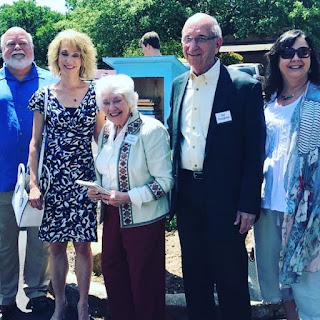
    Nearly four years ago, Bill, Diane, Reyna and Brad stood with Joan on the parking lot following worship. It was a warm, sunny May afternoon. Joan taught Sunday school to Grace United Methodist Church children for 37 years- our son Linus was in her final class. I am sure that was a coincidence. Joan was also a long time supporter of Project Transformation, a United Methodist summer reading ministry serving children all across our country. So when we dedicated the Little Library in her honor, packed for kids in the neighborhood with free books to be enjoyed, it was no small gesture. 

    Bill told me Joan was affectionately known as the White Tornado- an acknowledgement of both her white hair and her tenacious energy she brought to any task- at work or as a volunteer. By the time I became Joan’s pastor six years ago, she had endured one stroke in recent years, and a second would come a few years later. The energy she was known for before the 1st stroke was now different- not gone, different. The energy I witnessed every Sunday she was able to be in worship was heart energy. Following worship she would want to meet any new person there. She would warmly greet long time friends. Over the last year, mostly confined to a wheelchair, Joan still held court after worship, hugging and kissing as many people she could reach. In a favorite quote of Joan’s, Henri Nouwen says, “Our humanity comes to its fullest bloom in giving. We become beautiful people when we give whatever we can: a smile, a handshake, a kiss, an embrace, a word of love, a present, a part of life…all our life. One of the most moving experiences of life is the experience of giving.”

    It’s interesting to me that Joan chose Matthew 28:16-20, the Great Commission, to be read today. I’m not sure I’ve ever read it at a funeral before. The resurrected Jesus, at the very end of the gospel, calls his followers to the mountain for final words of blessing and instruction:

    “16 Now the eleven disciples went to Galilee, to the mountain where Jesus told them to go. 17 When they saw him, they worshipped him, but some doubted. 18 Jesus came near and spoke to them, ‘I’ve received all authority in heaven and on earth. 19 Therefore, go and make disciples of all nations, baptizing them in the name of the Father and of the Son and of the Holy Spirit, 20 teaching them to obey everything that I’ve commanded you. Look, I myself will be with you every day until the end of this present age.’”

    Joan certainly took the “teaching them all you’ve been taught” command to heart over 37 years! Again, this is the resurrected Jesus sending out the apostles. They are on the other side of the cross, the other side of death. Compelled by the Good News of their risen Lord, they are freed from the grief of recent days and empowered by the Holy Spirit to go and serve. We are here today to honor Joan’s memory, to perhaps share a few tears and much more laughter… but the best way to honor Joan’s life is to reflect it with our own. We will see Joan again. The power of resurrection is available for all who believe. But in between the day when we are reunited with our loved ones, there is work to be done.

    Let’s go back to the Nouwen passage from the book The Life of the Beloved I mentioned earlier, a favorite of Joan’s. It concludes, “True joy and happiness and inner peace come from giving ourselves to others. A happy life is a life for others.” Jesus is ready to leave the apostles and all of earth for good. They are a mixture of excitement and grief, even confusion. Summoning up his authority, Jesus sends out his former students: Now go! Train people, baptize people, teach people, and remember I will always be with you. The apostles are sent out. I believe Joan was sent. Sent to be a wife, sent to be a mother and grandmother, sent to be a teacher and volunteer and leader. By the power of the Holy Spirit, Joan was sent. You and I are sent by the same Spirit.

    In addition to Matthew 28:16-20 and the Nouwen section, Joan also left instructions to share Psalm 23, which, she said, she memorized when she was five years old. The psalmist ends that classic prayer with a sense of God’s presence. The King James version, probably the one Joan memorized, puts it this way: “Surely goodness and mercy shall follow me all the days of my life…” but the Common English Bible, a favorite of mine, says this: 

    “Yes, goodness and faithful love

        will pursue me all the days of my life,”

    God’s love doesn’t just follow; it pursues. We are commissioned. Sent. To serve. To love. Ready to use the gifts we have received to improve the lives of others. On that May afternoon four years ago, we concluded our brief service with this prayer: “Grant us your blessing, as we have consecrated this Little Library to your glory, that it may be an enduring witness before all your people, and that our lives may be consecrated in your service; through Jesus Christ our Lord. Amen.” Today I paraphrase the prayer this way:

    “Grant us your blessing, as we have celebrated Joan Douglass to your glory, that she may be an enduring witness before all your people, and that our lives may be consecrated in your service as hers was; through Jesus Christ our Lord. Amen.” 

  • Ash Wednesday 2022


    Joel 2:1-2

    Announcement of alarm and peril

    2 Blow the horn in Zion;

        give a shout on my holy mountain!

    Let all the people of the land tremble,

        for the day of the Lord is coming.

    It is near—

    2     a day of darkness and no light,

        a day of clouds and thick darkness!

    Like blackness spread out upon the mountains,

        a great and powerful army comes,

            unlike any that has ever come before them,

            or will come after them in centuries ahead.

    Change your hearts

    12 Yet even now, says the Lord,

        return to me with all your hearts,

            with fasting, with weeping, and with sorrow;

    13 tear your hearts

            and not your clothing.

        Return to the Lord your God,

            for he is merciful and compassionate,

            very patient, full of faithful love,

                and ready to forgive.

    14 Who knows whether he will have a change of heart

        and leave a blessing behind him,

        a grain offering and a drink offering

                for the Lord your God?

    15 Blow the horn in Zion;

            demand a fast;

            request a special assembly.

    16 Gather the people;

            prepare a holy meeting;

            assemble the elders;

            gather the children,

                even nursing infants.

    Let the groom leave his room

            and the bride her chamber.

    17 Between the porch and the altar

            let the priests, the Lord’s ministers, weep.

        Let them say, “Have mercy, Lord, on your people,

            and don’t make your inheritance a disgrace,

            an example of failure among the nations.

        Why should they say among the peoples,

            ‘Where is their God?’”

    2 Corinthians 5:20-6:10

    20 So we are ambassadors who represent Christ. God is negotiating with you through us. We beg you as Christ’s representatives, “Be reconciled to God!” 21 God caused the one who didn’t know sin to be sin for our sake so that through him we could become the righteousness of God. 6 1 Since we work together with him, we are also begging you not to receive the grace of God in vain. 2 He says, I listened to you at the right time, and I helped you on the day of salvation. Look, now is the right time! Look, now is the day of salvation!

    3 We don’t give anyone any reason to be offended about anything so that our ministry won’t be criticized. 4 Instead, we commend ourselves as ministers of God in every way. We did this with our great endurance through problems, disasters, and stressful situations. 5 We went through beatings, imprisonments, and riots. We experienced hard work, sleepless nights, and hunger. 6 We displayed purity, knowledge, patience, and generosity. We served with the Holy Spirit, genuine love, 7 telling the truth, and God’s power. We carried the weapons of righteousness in our right hand and our left hand. 8 We were treated with honor and dishonor and with verbal abuse and good evaluation. We were seen as both fake and real, 9 as unknown and well known, as dying—and look, we are alive! We were seen as punished but not killed, 10 as going through pain but always happy, as poor but making many rich, and as having nothing but owning everything.

    Matthew 6:1-6

    Showy religion

    6 “Be careful that you don’t practice your religion in front of people to draw their attention. If you do, you will have no reward from your Father who is in heaven.

    2 “Whenever you give to the poor, don’t blow your trumpet as the hypocrites do in the synagogues and in the streets so that they may get praise from people. I assure you, that’s the only reward they’ll get. 3 But when you give to the poor, don’t let your left hand know what your right hand is doing 4 so that you may give to the poor in secret. Your Father who sees what you do in secret will reward you.

    Showy prayer

    5 “When you pray, don’t be like hypocrites. They love to pray standing in the synagogues and on the street corners so that people will see them. I assure you, that’s the only reward they’ll get. 6 But when you pray, go to your room, shut the door, and pray to your Father who is present in that secret place. Your Father who sees what you do in secret will reward you.

    Matthew 6:16-21

    Showy fasting

    16 “And when you fast, don’t put on a sad face like the hypocrites. They distort their faces so people will know they are fasting. I assure you that they have their reward. 17 When you fast, brush your hair and wash your face. 18 Then you won’t look like you are fasting to people, but only to your Father who is present in that secret place. Your Father who sees in secret will reward you.

    Earthly and heavenly treasures

    19 “Stop collecting treasures for your own benefit on earth, where moth and rust eat them and where thieves break in and steal them. 20 Instead, collect treasures for yourselves in heaven, where moth and rust don’t eat them and where thieves don’t break in and steal them. 21 Where your treasure is, there your heart will be also.

    (more…)

  • Celebrating Caitlin Rogers

    Back in the late 90s, several couples at the church I served in Dallas were part of  a growing group of young adults. None of us had kids– some of the couples were still dating–but that was about to change. Early in the morning of January 7, 2001 the phone rang. Anne and Richard were new parents to a baby girl– Caitlin Elizabeth. Christy and I dressed quickly and made the journey in the middle if the night to the hospital. The group of young couples soon became a group of young families, which grew into a sort of extended 2nd family, which, 20+ years later, is spread out all over North Texas, and has, I don’t know, 20-30 kids in it. Caitlin was the first. Christy and I are just as proud and excited for Caitlin’s life on this February night as we were on that January night two decades ago.

    Before we all became busy with kids, our group did all kinds of activities together: bowling, movie nights, even camping retreats. I am remembering one such trip tonight. It must have been 1999 or 2000. Not sure of the location but it may well have been YMCA Camp Grady Spruce– it was the time a raccoon stole our communion bread before we had a chance to worship. Over that weekend, we read a simple but very profound book together, one I had read recently and loved. The other day as I unpacked my books and moved into my new office at the church, I found my copy of Tuesdays with Morrie by Mitch Albom. It’s a series of conversations between a former college professor, Morrie, who is dying, and a favorite former student, now an adult struggling to find meaning in life. After Cailtlin was killed last week, I pulled it off the shelf. I re-read it again in one sitting. Our son Miles (17), another one of those kids from our extended family, walked by, saw what I was reading, and said, “Hey we read that in English class last year.” That’s how old I am now. Anyway, I’m sitting by the fire, thinking about Caitlin, crying tears of gratitude and grief and everything else.

    “So many people walk around with a meaningless life. They seem half asleep, even when they’re busy doing things they think are important. This is because they are chasing the wrong things. The way you get meaning in your life is to devote yourself to loving others, devote yourself to the community around you, and devote yourself to creating something that gives you purpose and meaning.”

    This paragraph perfectly sums up where Caitlin was during the past months. Following a time of personal struggles and challenges, Caitlin had taken the initiative to make herself and her world better. Most people show this kind of self reflection after their behavior has resulted in some kind of harm to self or other relationships. Caitlin did the hard internal work, taking on her challenges directly. She was devoted to love, her community, and her purpose. She claimed her agency and took charge of her life and actions. Jesus said, “Blessed are the peacemakers; they will be called children of God.” Literally the final moments of Caitlin’s life were invested in peacemaking– bringing about the possibility of new wellbeing for herself and others.

    Later in the book, Morrie, dying of ALS, speaks about the necessity of detachment. Not that we should avoid feelings; in fact the opposite. “Detachment doesn’t mean you don’t let the experience penetrate you. On the contrary, you let it penetrate you fully. That’s how you’re able to leave it.” Take any emotion [fill in the blank]… if you hold back, if you don’t allow yourself to go all the way through them you can never get to being detached. You’re too busy being afraid you’re afraid of the pain, you’re afraid of the grief, you’re afraid of the of the vulnerability that living entails. But by throwing yourself into these emotions, by allowing yourself to dive in all the way even over your head, you experience them fully and completely. You know what love is. You know what grief is. And only then can you say, “all right I have experienced that emotion now I need to detach from that emotion.” Once he recognized an emotion he could say okay “that’s fear,” “okay that’s grief”… step away from it, step away. 

    What are we feeling tonight? Grief. Ok, that was grief. I’m not afraid of feeling grief but now I’m going to put that aside. Anger. Ok, that was anger. I’m not afraid of feeling anger but now I’m going to put that aside. Because I know that there are other emotions in the world and I’m going to experience them as well.

    So our large group of couples– probably not a family yet but we’re getting there–is sitting by a lake, outside, passing the book around the circle. Everyone is taking a chance to read. Some of us are crying… I’m crying all the way through the book big shock– but I keep hearing this laughter. I mean this guy in the book is sharing his soul and someone is laughing– often at the most inappropriate time and I discover it’s Anne. I don’t know if Richard was making some kind of comments or what but Anne would be cracking up no one has a laugh like Anne Rogers. Anne, you will laugh like that again. Jesus said, “When a woman is in labor she has pain but soon she forgets the pain because of the joy of bringing a human child into the world. So you have pain now, but I will turn your sorrow into Joy.” Anne, the joy we all felt that January morning 21 years ago in the middle of the night will overpower the grief we all feel now. You will laugh the full Anne Rogers laugh again. Richard, you and Caitlin shared those crystal blue eyes of yours. I know your eyes have shined with pride and love for Caitlin as much as they have shined with tears in recent days. As I said to you before she was a great light and her light will always shine. Nick, the other day when I asked you about lacrosse you talked about finding the right place, the right activity, to match your natural abilities and the friends you’ve made while playing. Those relationships and using your energy for the things you love will help you going forward.

    At the end of the book Morrie shares 1 final sentence that I recalled over and over again over the past 20-plus years it’s especially important for us to here today: 

    “Death ends a life, Not the relationship.” 

    Caitlin Rogers’ life ended last week, but the relationship we had with her endures. The way Caitlin lived her life, the actions and growth she experienced in her final months, the love and joy she shared with the world since the middle of the night in early January 2001. All of it continues. May her memory always be a blessing to those who loved her so much. May her enduring witness inspire each of us to do the internal peacemaking work our lives in our communities need. In doing so our pain will turn into Joy.